← All work
Three Generations 三代人
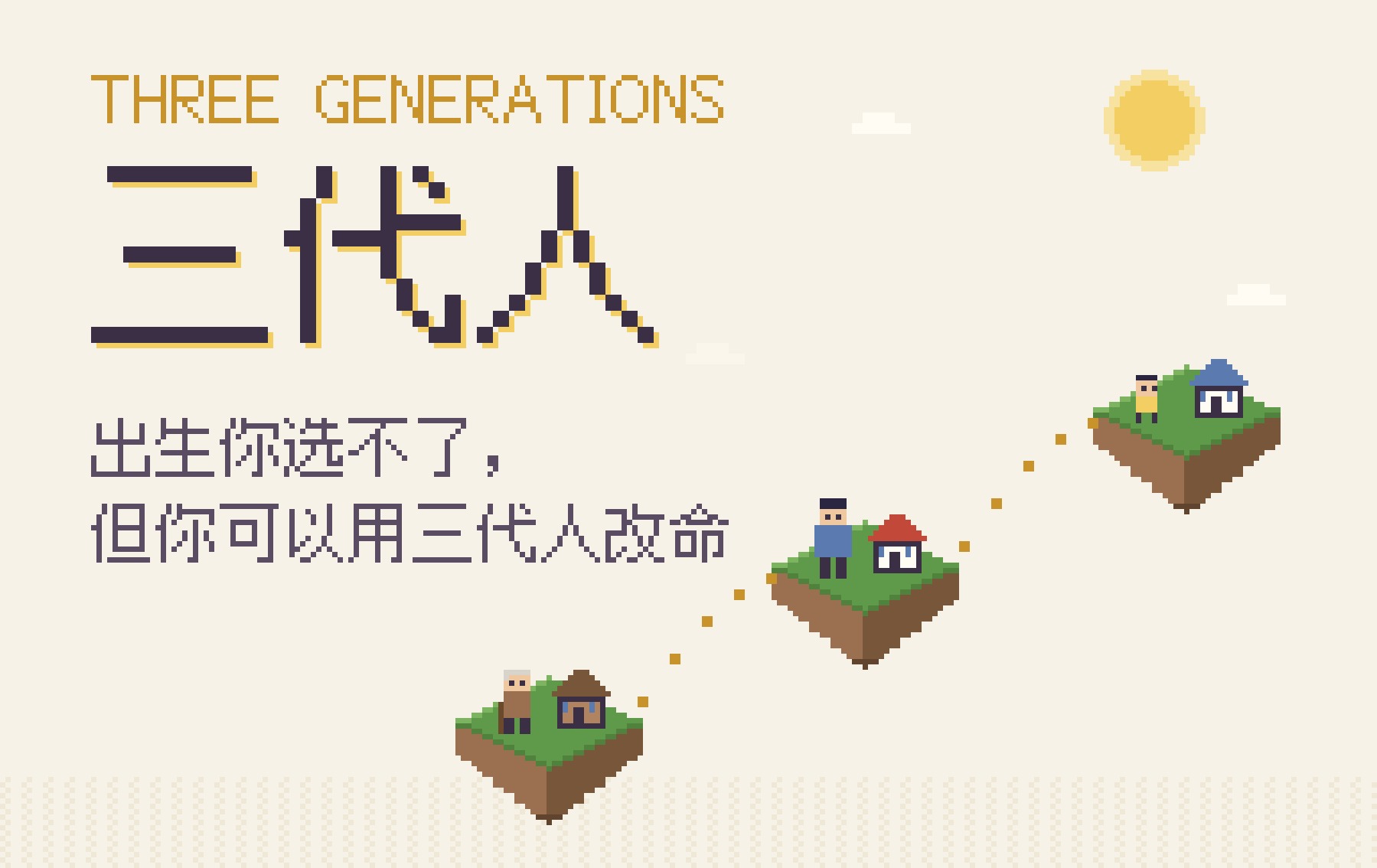
You can't choose where you're born — but three generations can change a family's fate. A pixel-art life sim about Chinese families.
Live Demo ↗You can't choose where you're born — but three generations can change a family's fate. A pixel-art life sim about Chinese families.
Live Demo ↗In China, people say it takes three generations to change a family's fate. Three Generations turns that saying into a game.
Birth decides only your family. School, where you go, who you love and whether you have children are up to you — then your child carries on what you leave behind.
Most life sims are about freedom. This one had to be about weight — the weight of where you start.
The hard part wasn't the art. It was making a life that feels true: no destiny handed out at birth, no children before a romance, no 1996 delivery riders. Every choice has to follow from your family, your era and the choices you already made.
48 fate lines grounded in real Chinese history, from famine and the sent-down youth to the gaokao, migrant work, bride prices, civil-service exams and livestreaming.
Around 20 to 25 real decisions per life. You never see your stats — only how other people see you: healthy, struggling, well-read, well-connected.
I ran 2,000 simulated lives to catch what felt false. Not one child before marriage, and no marriage without a romance first.
The island is the family: each generation lives on a floating pixel diorama. Marry, and your partner moves onto it; have a child, and another little figure appears.
Time you can see: the sky follows your age from morning to night, and it rains when life gets hard.
One visual voice: warm paper tones, a pixel Chinese typeface and chunky outlines across every panel, so the story and the scene feel like one game.
Where did your family end up? When a life ends, an 11-rung class ladder shows each generation's climb or fall.
Share a seed: every report carries a seed. A friend who types it in is born into the same family, to see if they can do better.
An early version handed out a destiny at birth. It felt wrong, so now birth only decides where you start.
Hiding the stats keeps it a life, not a spreadsheet. You read yourself the way others read you.
Real, sometimes helpless, sometimes a comeback. Memes are seasoning, never the whole dish.
With AI writing the code, the bottleneck moved to judgment. Most of my time went into play-testing whole lives and asking one question: would this really happen to a family like this?